



With energy bills, food prices and fuel costs still high, the UK’s growing freelance workforce, now 4.8% of full-time workers, is rethinking how it travels, swapping traditional holidays for workcations that make the trip worth the expense. Here’s a practical itinerary showing you exactly how to balance work and play on vacation abroad (and closer to home), with top destinations and travel routes included.
How to plan a workcation that actually works
Getting the most from a workcation comes down to one thing: protecting your working hours without sacrificing the reason you booked the trip. The approach that’s gaining traction among UK freelancers is structured flexibility. It’s committing to a fixed work window each day and treating everything outside it as genuinely off limits.
The most reliable version of this is a four-hour morning block. Getting the focused work done before midday, ideally before the heat sets in if you’re heading somewhere warm, means the rest of the day is yours without that nagging sense of unfinished business following you to the beach.
Where you stay matters more than most people budget for
Hotel Wi-Fi can be notoriously unreliable, so freelancers who’ve done this before tend to book accommodation within walking distance of an established co-working space rather than relying on whatever broadband the hotel happens to offer.
Co-working spots cost a little more time to research upfront, but it pays off the moment you’ve got a client call at 10 am. If you are travelling with a young family, having this quiet space booked in advance can also help achieve deep work with fewer distractions.
Time differences that work in your favour
Destination choice can also work in your favour time-wise. Turkey, for instance, sits two ahead of the UK, which means you can wrap up a full working day just as your British clients are heading out for lunch. That kind of time-zone overlap makes the working day feel shorter and evenings feel longer.

What the jet fuel situation actually means for summer flights
If you’ve seen headlines about fuel supply concerns and wondered whether your summer flights are at risk, the short answer is: probably not, but it’s worth understanding what’s happening.
The UK government recently issued guidance following tensions in the Strait of Hormuz, which raised questions about jet fuel availability. The Department for Transport has confirmed that UK airlines are not currently reporting a shortage, though supplies are being monitored on a daily basis.
What has changed are the rules around how airlines manage their schedules. Carriers can now consolidate flights more freely without being penalised for giving up take-off and landing slots. That’s a change designed to give airlines more flexibility to reroute or rebook passengers well in advance if fuel pressure increases, rather than cancelling at the last minute.
Flight cancellations and your rights
If your flight is cancelled, UK law still entitles you to a full refund or an alternative route, so your rights remain intact.
However, many travellers may not realise that, based on examples from air passenger rights legislation and decisions by UK and EU courts, there are events which are likely to be viewed as “extraordinary circumstances”.
Your airline is likely to reject a claim for fixed sum compensation if these caused your delay or cancellation (source: CAA):
- The impact of an unruly passenger
- Weather conditions incompatible with the safe operation of the flight
- Strikes (unrelated to the airline, such as airport staff, air traffic control or border force)
- Acts of terrorism or sabotage
- Security risks
- Air traffic control management decisions affecting flight scheduling
- Political or civil unrest
- Hidden manufacturing defects (a manufacturer’s recall that grounds a fleet of aircraft
- Bird strikes
- Tyre damage caused by a foreign object
- Fuel spillage on a runway
The practical upshot for anyone booking now is to keep an eye on your airline’s communications closer to departure and to consider travel insurance that covers rerouting costs.
Turkey via Valencia: A beach-city workcation that plans itself
One route that offers not only a mix of cultures and cuisines but a balance of city and beach is the Valencia to Turkey corridor.
Valencia makes a genuinely excellent starting point. The stopover structure gives you a natural buffer against layovers, which can eat into your holiday.
Various airlines fly from the UK to Valencia. Once you arrive, the Ruzafa neighbourhood in particular has quietly become one of Europe’s better spots for remote workers — independent cafés with decent Wi-Fi, a relaxed pace and enough going on in the evenings to make the trip feel like an actual holiday.
There are plenty of co-working places to choose from in Valencia. One of the prettiest and unique spots can be found at Dreamland Co-Working.
Since Valencia is a seaside city, you are spoiled for choice for beach day trips. Here are some suggested beaches to visit along the coast. There are direct metro, tram and bus links to Valencia’s Malvarrosa city beach. Ubers and taxis are also an option.
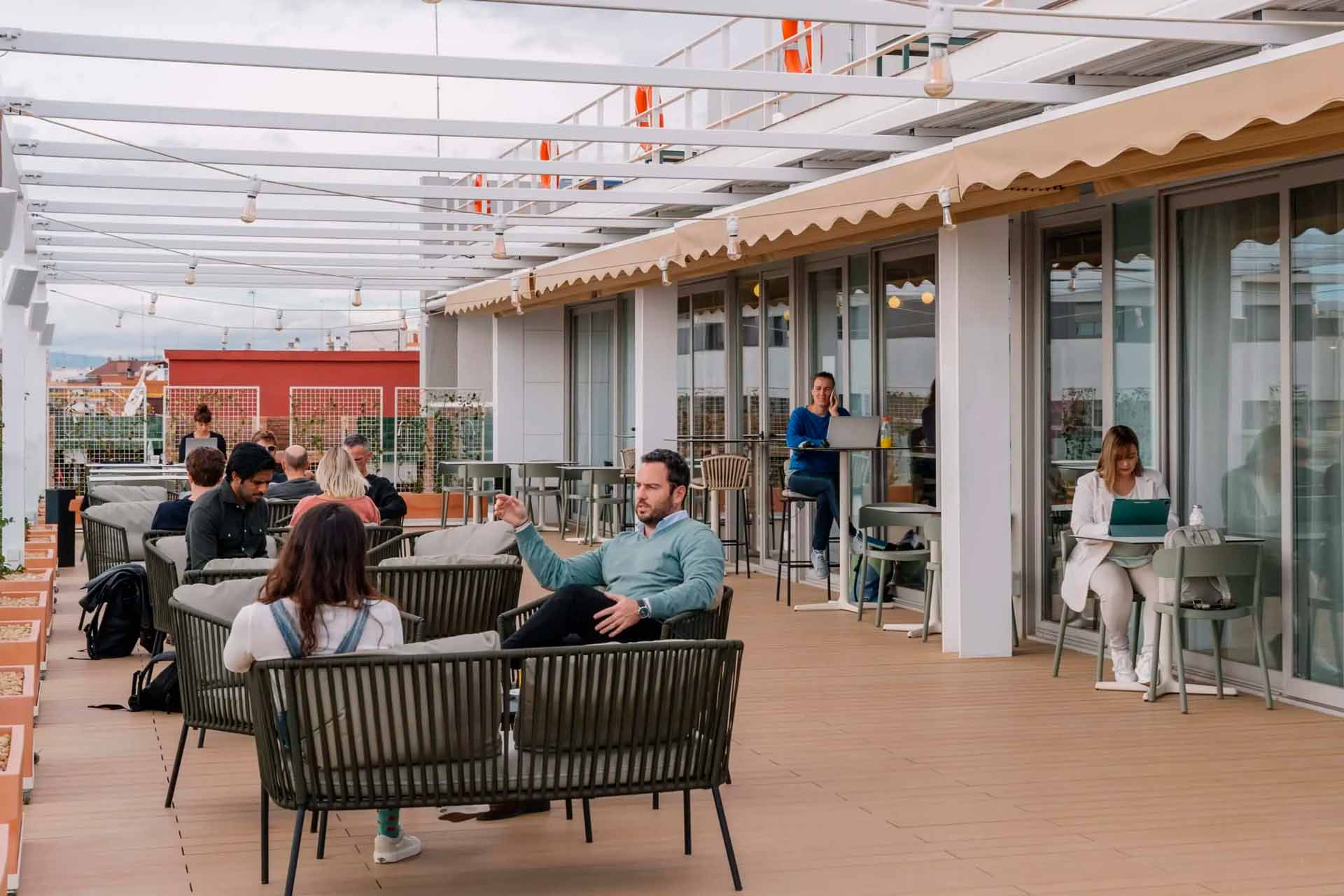
However, if you actually want to work close to the beach, check out Wayco Cabanyal, which is near the ocean and even has special rates for those who want to use its rooftop terrace. The Wayco Cabanyal terrace is open from Monday to Friday, from 9 a.m. to 7 p.m. For 10 Euros, plus VAT, you can enjoy the rooftop terrace for three hours of consecutive work, plus a drink.
A few days in Valencia lets you settle into a working rhythm before the bigger leg of the journey.
From Valencia, the jump across to the Mediterranean feels manageable rather than exhausting. Despite the geopolitical noise around the Strait of Hormuz, Turkey’s main draws — Istanbul, Cappadocia, and the Aegean Coast — are nowhere near the areas of concern and were running at full capacity at the time of writing.
For those looking for a mix of city and beach, here are 6 of the best beaches within reach of İstanbul, according to Lonely Planet.
If you would like to experience other parts of Turkey, the southern coast is worth a serious look. However, the quickest way to get there is by plane; here are different travel routes to consider.
Resorts around Antalya and Fethiye have genuinely leaned into the working holiday market with proper desk setups, reliable fibre broadband, and the kind of proximity to the sea that makes a midday swim feel like a reasonable lunch break. It could prove a nice option for a first-time workcation.
Turkey travel tips:
🪪It is illegal not to carry some form of photographic ID in Turkey. Always carry your passport or residence permit. In some busy areas, especially Istanbul, the authorities may stop people for ID checks. There are also several police checkpoints on main roads across Turkey. Cooperate with officials conducting checks.
🕌Dress modestly if you’re visiting a mosque or a religious shrine to avoid causing offence.
Eurostar options
If the Valencia-Turkey route doesn’t suit your schedule or idea of a holiday, there are even more convenient alternatives depending on what you’re after.
The Eurostar option, if all goes to plan, is relatively stress-free. Cities including Narbonne, Bordeaux and Utrecht are reachable without setting foot in an airport, both have well-established remote working infrastructure, are walkable, and not affected by jet fuel logistics. For freelancers who want to sidestep aviation uncertainty entirely, this is the obvious move.
Booking your summer trips now means you can snap up Eurostar fares from as little as €19*, with departures between the 18th of May and the 6th of September 2026.
Lowest flexible fares this summer season:
- Paris from €29*
- Amsterdam from €29*
- London from €44*
- Cologne from €19*
- Brussels from €29*
Staycation
Closer to home, the UK coastal option has come a long way from the traditional staycation. No airports, no currency exchange, no jet lag. Sometimes the simplest option is the right one.
Margate and St Ives, for example, both have co-working spaces that have been set up specifically with remote workers in mind. However, here are other UK beach destinations for inspiration if St. Ives or Margate are not on your holiday radar.
Making it work in practice
The freelancers who come back from workcations feeling like the trip was worth it tend to be the ones who planned for disruption rather than hoping it wouldn’t happen. That means knowing your passenger rights before you fly, having a backup co-working space identified in each destination, and building enough slack into your itinerary that a delayed connection doesn’t derail a client deadline.